Monroe County Local History Room & Museum


News

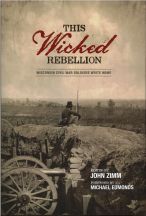
New History Books Added to Gift Shop
Ho-Chunk history, Civil War veterans, German heritage and farming history are yours to learn about through the Local History Room's gift shop: www...
Click here for more

2011 Land Atlas & Plat Book Now Available
A useful tool for researchers, pick up a copy of the most recent Plat Book for Monroe County, WI...
Click here for more

Monroe County Local History Room & Museum


"Farmer Goes to War: Monroe County in the American Civil War"
Suggested Grade Level: 3-8

"History Detectives"
Suggested Grade Level: 4-8

"A Travel Through Time: A Day in the Life of a Kid in 1880"
Suggested Grade Level: 1-5

"Then & Now: Learning History From Old Things"
Suggested Grade Level: 2-6

"Pack Your Trunk: Immigration to Monroe County"
Suggested Grade Level: 3-6

"Survivor: Pioneer Farm Life"
Suggested Grade Level: 3-8

"Discover Your Roots: An Introduction to Genealogy"
Suggested Grade Level: 5-8


Title: "Farmer Goes to War: Monroe County in the American Civil War"

Topics: Civil War; Social History; Agriculture; Technological Change
Suggested Grade Level: 3-8
Required Time: 45-75 minutes

Description: Students will learn what being a Union soldier from Monroe County was like during the American Civil War, from the drudgery of drill to the horrors of battle. Through hands-on activities and live demonstration, students will gain knowledge of: uniforms & gear, weaponry & warfare, camp life & a soldier’s diet, death, disease, & sacrifice. Students will hear stories of real war experiences, handle replicas of Civil War items, and participate in activities that a soldier would have (eg. military drill, packing one’s knapsack).

Goals:

  • Personalize the Union soldier‘s experience for each student
  • Broaden the understanding of Monroe County’s contribution to the “war against the rebellion.”
  • Identify what the Union soldier from Monroe County would have worn, carried, and used on a daily basis.
  • Appreciate the sacrifice of the citizen soldier
  • Understand how family and farm life was affected by the men’s absence
Wisconsin Model Academic Standards
Social Studies Performance Standards Related to the Program
Grade 4

B.4.1 Identify and examine various sources of information that are used for constructing an understanding of the past, such as artifacts, documents, letters, diaries, maps, textbooks, photos, paintings, architecture, oral presentations, graphs, and charts

B.4.3 Examine biographies, stories, narratives, and folk tales to understand the lives of ordinary and extraordinary people, place them in time and context, and explain their relationship to important historical events

B.4.4 Compare and contrast changes in contemporary life with life in the past by looking at social, economic, political, and cultural roles played by individuals and groups

B.4.5 Identify the historical background and meaning of important political values such as freedom, democracy, and justice

B.4.7 Identify and describe important events and famous people in Wisconsin and United States history

B.4.8 Compare past and present technologies related to energy, transportation, and communications and describe the effects of technological change, either beneficial or harmful, on people and the environment

B.4.9 Describe examples of cooperation and interdependence among individuals, groups, and nations

Click HERE to book your school group at LHR or to ask a question


Title: "History Detectives"

Topics: Research Methods; Primary vs. Secondary Sources
Suggested Grade Level: 4-8
Required Time: 30-45 minutes

Description: An introduction to researching and writing history. Using the analogy of detectives solving a crime, students will understand what “history” is, learn how to select a research topic, differentiate between “Primary” and “Secondary” sources, locate and evaluate sources of information, and correctly cite sources within their document.

Goals:

  • Students will understand what “history” is and how it is researched and recorded
  • Students will know the difference between “Primary” and “Secondary” sources
  • Students will be able to properly evaluate and give credit for sources of information used in their projects
Wisconsin Model Academic Standards
Social Studies Performance Standards Related to the Program
Grade 4

B.4.1 Identify and examine various sources of information that are used for constructing an understanding of the past, such as artifacts, documents, letters, diaries, maps, textbooks, photos, paintings, architecture, oral presentations, graphs, and charts

Click HERE to book your school group at LHR or to ask a question


Title: "A Travel Through Time: A Day in the Life of a Kid in 1880"

Topics: Childhood; Rural Life; Social History
Suggested Grade Level: 1-5
Required Time: 45-90 minutes

Description: Students will place themselves into the life of a kid living in rural Monroe County in 1880. Through hands-on activities, students experience childhood of the past by performing chores, going to school, playing games, and engaging in other 19th century-appropriate activities.

Goals:

  • Compare and contrast students' lives today with the lives of children in 1880
  • Identify technological and cultural differences in 1880 from today through photographs, objects, discussions, and activities
  • Relate to rural life in Monroe County during the late 19th century
Wisconsin Model Academic Standards
Social Studies Performance Standards Related to the Program
Grade 4

B.4.1. Identify and examine various sources of information that are used for constructing an understanding of the past, such as artifacts, documents, letters, diaries, maps, textbooks, photos, paintings, architecture, oral presentations, graphs and charts

B.4.4 Compare and contrast changes in contemporary life with life in the past by looking at social, economic, political, and cultural roles played by individuals and groups

B.4.8 Compare past and present technologies related to energy, transportation, and communications and describe the effects of technological change, either beneficial or harmful, on people and the environment

B.4.9 Describe examples of cooperation and interdependence among individuals, groups, and nations

C.4.3 Explain how families, schools, and other groups develop, enforce, and change rules of behavior and explain how various behaviors promote or hinder cooperation

Click HERE to book your school group at LHR or to ask a question


Title: "Then & Now: Learning History From Old Things"

Topic: Historic Preservation; Social History
Suggested Grade Level: 2-6
Required Time: 30-45 minutes
Description: Students learn how history museums preserve the past by examining the materials commonly collected by museums. In addition, students participate in a game, "guess the artifact," in which they have the opportunity to determine the purpose of historical artifacts that today are unfamiliar to most observers. Hands-on activities give the students the opportunity to connect with the artifacts and examine the historical context in which they were originally used.

Goals:

  • Explain the importance of preserving items from the past for future generations
  • Learn how historical artifacts preserve memory and relate stories of past human experiences.
  • Appreciate what life was like in the past so students can better contemplate their lives today
  • Analyze the change and development of certain familiar items over time, such as those commonly found in the home.
  • Gain an awareness of the role of History Museums in sharing and protecting the items and stories of those who came before us
Wisconsin Model Academic Standards
History Performance Standards Related to the Program
Grade 4

B.4.1 Identify and examine various sources of information that are used for constructing an understanding of the past, such as artifacts, documents, letters, diaries, maps, textbooks, photos, paintings, architecture, oral presentations, graphs, and charts

B.4.8 Compare past and present technologies related to energy, transportation, and communications and describe the effects of technological change, either beneficial or harmful, on people and the environment

Click HERE to book your school group at LHR or to ask a question


Title: "Pack Your Trunk: Immigration to Monroe County"

Topics: Immigration; Pioneer Life; Social History
Suggested Grade Level: 3-6
Time Required: 45-90 minutes

Description: Students learn about the experience of being an immigrant, from deciding to leave the home country to establishing a new home in Monroe County. Students will experience the immigrants' challenges of packing for the journey, traveling great distances, and establishing a new home on the frontier.

Goals:

  • Personalize the immigrant experience for each student
  • Broaden understanding of who settled Monroe County
  • Experience choices facing an immigrant that require problem-solving skills on the part of the student
  • Investigate materials that tell about the past, creating a concrete expression for the abstract concept of "the immigration experience"
Wisconsin Model Academic Standards
History Performance Standards Related to the Program
Grade 4

B.4.1 Identify and examine various sources of information that are used for constructing an understanding of the past, such as artifacts, documents, letters, diaries, maps, textbooks, photos, paintings, architecture, oral presentations, graphs, and charts

B.4.4 Compare and contrast changes in contemporary life with life in the past by looking at social, economic, political, and cultural roles played by individuals and groups

B.4.8 Compare past and present technologies related to energy, transportation, and communications and describe the effects of technological change, either beneficial or harmful, on people and the environment

B.4.9 Describe examples of cooperation and interdependence among individuals, groups, and nations

Click HERE to book your school group at LHR or to ask a question


Title: "Survivor: Pioneer Farm Life"

Topics: Pioneer Life; Settlement; Social History; Agriculture; Technological Change
Suggested Grade Level: 3-8
Time Required: 45-75 minutes

Description: Students explore how settlers lived 150 years ago on the frontier of Monroe County, WI. Through the use of an interactive game, students will follow the experiences of a typical pioneer family from the moment they arrive in Monroe County, to buying land, establishing a farm, expanding their farm, transitioning to dairy farming, and passing the farm to the next generation. Students will learn about the events and experiences that helped or hurt a pioneer family’s efforts for survival.

Goals:

  • Personalize the settler experience for each student
  • Broaden understanding of Monroe County’s agricultural heritage
  • Identify the challenges faced by settlers determining their survival
  • Recognize the importance of cooperation among neighbors
  • Appreciate the effect mechanization had upon farming and rural economies
Wisconsin Model Academic Standards
Social Studies Performance Standards Related to the Program
Grade 4

B.4.1 Identify and examine various sources of information that are used for constructing an understanding of the past, such as artifacts, documents, letters, diaries, maps, textbooks, photos, paintings, architecture, oral presentations, graphs, and charts

B.4.4 Compare and contrast changes in contemporary life with life in the past by looking at social, economic, political, and cultural roles played by individuals and groups

B.4.8 Compare past and present technologies related to energy, transportation, and communications and describe the effects of technological change, either beneficial or harmful, on people and the environment

B.4.9 Describe examples of cooperation and interdependence among individuals, groups, and nations

Click HERE to book your school group at LHR or to ask a question


Title: "Discover Your Roots: An Introduction to Genealogy"
Topic: Genealogy; Research Methodology
Suggested Grade Level: 5-8
Required Time: 30-45 minutes

Description: Students learn how to research basic information about people who lived in the past through examining primary sources and research aids (indexes). Sources to be examined include: birth, death, and marriage records, Federal and State Census records, old newspapers, court records, plat books, cemetery records and more. Students will learn the historic research process by piecing together bits of personal information extracted from a variety of sources regarding an otherwise unknown person from the past, and weave that information together to produce a short "history" of that individual. Students will then be encouraged to research their own family history using the knowledge, sources, and methodologies learned in this program.

Goals:

  • Understand the types of resources available to the public for use in genealogy and researching individuals from the past.
  • Examine various public records to extract useful personal data for an individual living in the past.
  • Synthesize historical data to create a large picture of an event (such as a person's life)
  • Gain an appreciation for family history, and when possible, open a new avenue for communication with an older generation.
  • Acquire the knowledge of researching one's own family history to begin an engrossing lifelong project of research and exploration.
Wisconsin Model Academic Standards
History Performance Standards Related to the Program
Grade 8

B.8.1 Interpret the past using a variety of sources, such as biographies, diaries, journals, artifacts, eyewitness interviews, and other primary source materials, and evaluate the credibility of sources used

B.8.12 Describe how history can be organized and analyzed using various criteria to group people and events chronologically, geographically, thematically, topically, and by issues

Click HERE to book your school group at LHR or to ask a question


Monroe County Local History Room & Museum | 200 W. Main St., Sparta, WI 54656 | Phone: (608)269-8680 | Fax: (608)269-8921 | Email: MCLHR@centurytel.net
Website development by Webteam, Inc.